
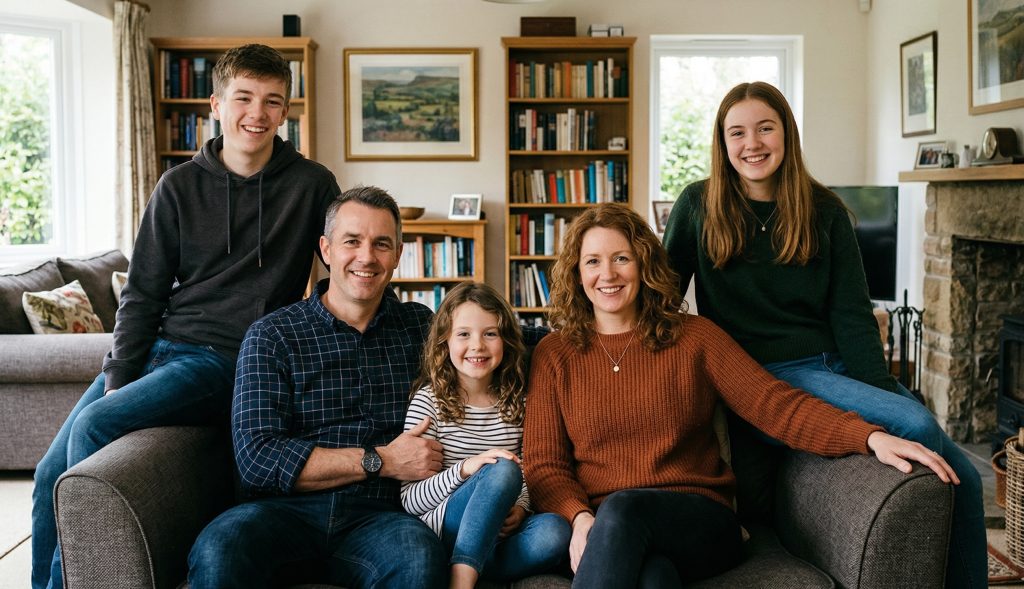
Blended Families need thoughtful planning
You trust your spouse completely. But if you’re in a blended family and your estate plan simply says “everything goes to my spouse,” your own children could end up with nothing—not because anyone meant harm, but because ownership changes everything. Whether you are in Fairfax County, or Loudoun County, understanding how Virginia law treats these assets is the first step to protecting your legacy.
Read more…

Here’s What Can Happen to Blended Families When a Spouse Dies
If you are in a blended family, you may believe the simplest estate plan is the fairest one: “I’ll leave everything to my spouse. They’ll take care of my kids.”
That approach often works in a first and only marriage. If you and your spouse share the same biological or adopted children, the surviving spouse will most often naturally leave everything to your shared children later. But in a blended family, the dynamic is completely different.
In this article, you will learn what normally happens when spouses in blended families leave everything to each other, why children from a first marriage are often accidentally disinherited, how court battles unfold, and what you can do now to protect the people you love from conflict.
Why “I Leave Everything to My Spouse” Feels Right
Most couples in blended families create simple wills that say, “I leave everything to my spouse.” They also name each other as beneficiaries on their retirement accounts and life insurance policies. It seems to make sense, right? You trust your spouse. You believe they will “do the right thing.” You may even have said, “Of course you’ll make sure my kids are taken care of.”
There’s evidence of this, too. While both of you are alive, the family may get along beautifully. Holidays are shared. Grandchildren visit. There is no visible tension.
But the law does not enforce verbal promises. It enforces ownership.
When you leave assets outright to your spouse, either through a will or beneficiary designations, your spouse receives those assets free and clear. There are no legal restrictions. There is no obligation to preserve anything for your children from your prior marriage.
Your spouse now owns everything. And ownership changes everything.
The Pattern That Repeats in Nearly Every Blended Family
Once the surviving spouse owns the assets outright, several predictable things can happen.
Life continues. The surviving spouse may remarry. They may revise their estate plan. They may change beneficiary designations. They may spend assets for retirement, healthcare, or a new lifestyle.
Even without bad intent, the surviving spouse will often prioritize their own biological children. That is human nature. When they eventually die, their estate plan typically leaves everything to their children—not to yours.
At that point, your children from your first marriage often receive nothing. Not because you did not love them. Not because you intended to exclude them. But because the structure of your plan allowed it.
I have seen families throughout Northern Virginia who got along famously while both spouses were alive fall apart after the first death. The surviving spouse is blamed for not “sharing.” The children feel betrayed. Emotions escalate quickly.
The deceased spouse likely had good intentions and complete trust. But trust is not a legal strategy.
The takeaway: Once assets pass to your surviving spouse outright, your children from a prior marriage have no legal claim, no matter what was promised.
That gap between good intentions and legal reality is exactly where family conflict begins—and it often ends up in court.
When Conflict Moves Into Court
When children from a first marriage are left out, they are often shocked. They believed they would inherit something. They may have had verbal assurances from both spouses and feel betrayed. They may feel the situation is unfair.
Conflict frequently turns into litigation. Here is what that looks like in real life in Fairfax County Court or Loudoun County Court:
- The deceased spouse’s children challenge the will. They claim that their parent was manipulated by the step-parent, or that their parent lacked the mental capacity to execute the will.
- The surviving spouse hires legal counsel to defend the estate.
- Sky–high costs: Tens of thousands up to $50,000 or even more more in attorneys’ fees and court costs.
- The estate administration is delayed for months or years.
- The emotional toll: Family members must take time away from work to attend court hearings, meet with their attorneys, and gather evidence.
- Once strong family relationships are permanently damaged.
Even after going through all this, Virginia judges are generally reluctant to invalidate properly drafted and executed wills. Courts generally assume that if you signed a will, you intended its outcome.
Importantly, some children cannot afford to contest the will at all. Litigation requires money. If the surviving spouse controls the assets, the children from the first marriage may not have the resources to fight, and they must accept that they will receive no inheritance.
The result is predictable: years of bitterness, significant expense, and unsatisfactory results.
In short: Contesting a will is expensive, emotionally devastating, and rarely successful. The time to prevent this is now, not after it’s too late.
It’s Not About Relationships—It’s About Legal Design
The issue in blended families is not love. It is not a lack of confidence in one another. It is an incomplete estate plan.
When your estate plan is incomplete, you could transfer ownership outright to your spouse and remove safeguards. You rely entirely on future decisions you will not be able to influence. You aren’t educated on what could go wrong, and you don’t know what options are available to ensure your plan does what you want it to.
But documents alone do not ensure your loved ones will be protected. What protects families is thoughtful design, an advisor who understands you and your family, and can help you craft a complete estate plan that ensures the people you love most will be cared for the way you want.
That may include:
- Using a legal framework designed with asset protection in mind, instead of leaving assets outright.
- Defining what your spouse can use during their lifetime.
- Preserving a portion of assets for your children.
- Coordinating beneficiary designations with your overall plan.
- Communicating your intentions while you are alive.
This approach does not signal a lack of certainty in your partner. It creates clarity and security for the people you love most.
The result: A well-designed plan protects your spouse AND preserves your children’s inheritance. You don’t have to choose.
Take Action Now to Protect Everyone You Love
If you are part of a blended family, a simple “everything to my spouse” plan may not accomplish what you believe it will. You need a plan that works when your loved ones need it to.
I am an estate planning attorney based in Reston, Virginia. The process begins with education. I help you understand exactly what would happen to you, your family, and your assets if you were to die now. Then we design a plan that clarifies and documents your intentions and goals. Most importantly, when you are gone, your loved ones will not be left alone while they’re grieving. They will have a trusted advisor who understands you and them, and can guide them through the process.
Let’s create a plan together that protects your spouse, honors your children, and prevents the conflict.
Click here to schedule a complimentary 15-minute call to get started.
This article is a service of The Law Office of Sean Joyner PLLC, a Personal Family Lawyer Firm. We don’t just draft documents; we ensure you make informed and empowered decisions about life and death, for yourself and the people you love. That’s why we offer an Estate Plan Design Meeting, during which you will get more financially organized than you’ve ever been before and make all the best choices for the people you love. You can begin by calling our Reston office today to schedule an Estate Plan Design Meeting.
The content is sourced from Personal Family Lawyer for use by Personal Family Lawyer firms, a source believed to be providing accurate information. This material was created for educational and informational purposes only and is not intended as ERISA, tax, legal, or investment advice. If you are seeking legal advice specific to your needs, such advice services must be obtained on your own, separate from this educational material.
The post Blended Families need thoughtful planning appeared first on Joyner Trust Law.